Every touchpoint connected. Every journey learning.
Most beauty brands have touchpoints. Few have a journey. The difference is whether those touchpoints learn from each other.
Why channels work harder but the journey stays broken
Email, SMS, social, paid, site, and retail all run independently. Each team optimises its own channel. Nobody sees how they connect or where customers fall between them. The result is duplicated effort, inconsistent messaging, and customers who receive 5 messages in one channel and zero in another.
Where journey orchestration breaks
Channel silos
Email, paid, social, and on-site teams operate independently without shared customer context or coordinated sequencing.
No cross-channel view
Nobody can see the full customer journey from first touch to repeat purchase. Each channel reports its own metrics in isolation.
Generic segmentation
Customers are grouped by demographics, not behaviour or intent. Messages do not match where the customer actually is in their journey.
What most brands do
Most brands try to fix this with more tools, more integrations, or more complex campaign logic. These add complexity without adding intelligence. The tools still do not talk to each other in a way that produces better customer outcomes.
What Beauty 2.0 builds instead
We build the orchestration layer that connects channels, sequences actions based on behaviour, and creates a single view of the customer journey. Each touchpoint learns from the others. Each cycle produces better outcomes than the last.
What you get
Expected outcomes
Connected journeys
Touchpoints work together instead of competing for the same customer's attention.
Behaviour-based triggers
Actions fire based on what customers do, not arbitrary schedules or manual campaign launches.
Learning system
Each cycle improves the next. Journey data feeds back into content, channel, and offer decisions.
Reduced waste
Less duplicated messaging, fewer irrelevant offers, better use of channel budget.
Who this is for
- Ecommerce and CRM leads managing multiple channels without a connected customer view
- Marketing leads who know channels are working but suspect the journey between them is broken
- Founders who want to stop optimising channels and start optimising the customer experience
Implementation timeline
Initial audit
1-2 weeks
Architecture
2-3 weeks
Build
4-6 weeks
First data
8-10 weeks.
Not ready for the full system?
Start with a focused audit
Get a clear diagnosis of where the problem sits and what to fix first. No commitment to a full system build until you have the evidence.
Common questions
Does this require replacing our existing tools?
No. We build the orchestration layer on top of your existing email, SMS, paid, and site tools. The system connects what you have, not replaces it.
Where this solution runs
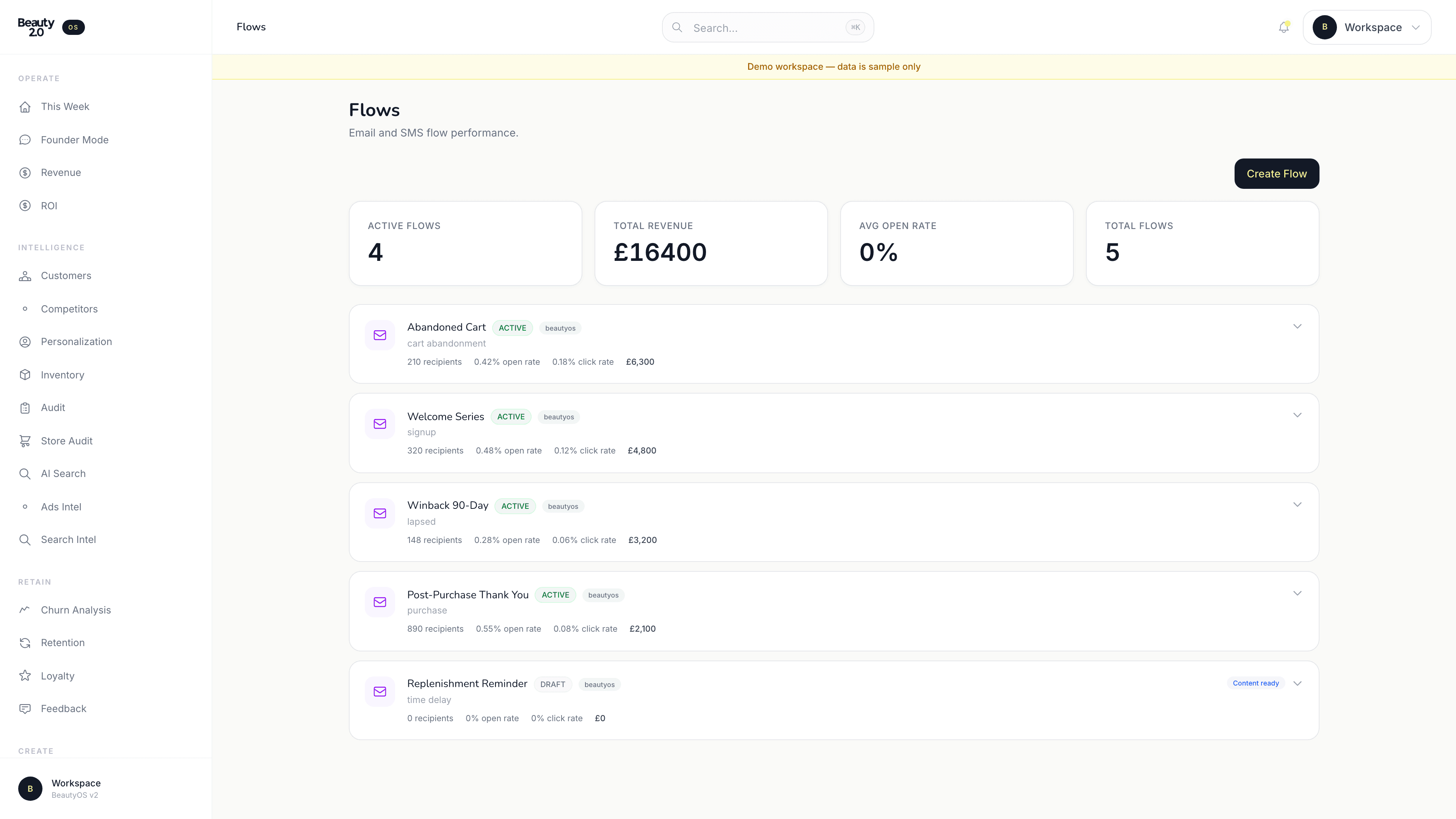
Every Beauty 2.0 engagement persists into the operating system. Track it, review it, and iterate without rebuilding the data each time.
Go deeper on this
Articles, resources, and definitions that connect to this solution.
From the blog
Cakes Body Did $100m in Three Years on TikTok, Then Built a Studio. The Documentary Got 371,600 Views.
DTC GrowthAïza Grew Revenue Ninefold With About 20 Staff and One Product Doing a Third of Sales. That Combination Is the Story.
DTC GrowthMilani Doubled to $250m Holding Three Price Points and One Customer. Most Brands Fragment Instead.
In the glossary
Ready to fix this?
Start with a discovery call to talk through what is happening, or book an audit if you want a structured diagnosis first.