Returns are a margin problem hiding as a logistics problem
Every return costs more than the refund. Shipping, restocking, customer service, and lost lifetime value compound into a margin leak most brands underestimate.
Why returns cost 2-3x what the refund number suggests
Returns in beauty are not random. They follow patterns. Wrong shade, wrong product for skin type, unmet expectations from misleading content, or missing post-purchase guidance. The refund is the visible cost. The hidden cost - logistics, customer service time, margin on unsellable returns, and lost customer lifetime value - is 2-3x larger.
Where return costs compound
Wrong product selection
Customers buy based on incomplete information and return when the product does not match expectations. This is fixable with better matching and advisory tools.
No post-purchase support
After purchase, there is no guidance on how to use the product effectively. Customers who do not see results in the first week assume the product does not work.
Hidden margin erosion
Returns cost 2-3x the refund value when shipping, handling, customer service, restocking, and lost LTV are included. Most brands only track the refund number.
What most brands do
Most brands accept returns as a cost of doing business and focus on making the return process easy. This is important for customer experience but does not address why returns are happening in the first place.
What Beauty 2.0 builds instead
We build return prevention into the customer journey. Better product matching reduces wrong-product purchases. Clearer expectations in content and product pages reduce disappointment returns. Post-purchase education and usage guidance reduce abandonment-based returns.
What you get
Expected outcomes
Lower return rate
Fewer wrong-product purchases means fewer returns at source.
Protected margin
Every prevented return saves 2-3x the refund value in total cost.
Better customer experience
Customers who choose right and get post-purchase support have higher satisfaction and longer retention.
Clearer root causes
Return data categorised by cause so the team knows which improvements will have the most impact.
Who this is for
- Ecommerce and ops leads in brands where return rates are above 10% or rising
- Founders in shade-dependent or multi-step product categories where wrong-product returns are common
- Finance leads who want to quantify the true cost of returns beyond the refund line item
Implementation timeline
Initial audit
1 week
Root cause analysis
2-3 weeks
System build
4-6 weeks.
Not ready for the full system?
Start with a focused audit
Get a clear diagnosis of where the problem sits and what to fix first. No commitment to a full system build until you have the evidence.
Common questions
What return rate should we be targeting?
This varies by category. Skincare brands should target 3-6%. Colour cosmetics 5-10%. If you are above these ranges, there is significant room for system-driven improvement.
Where this solution runs
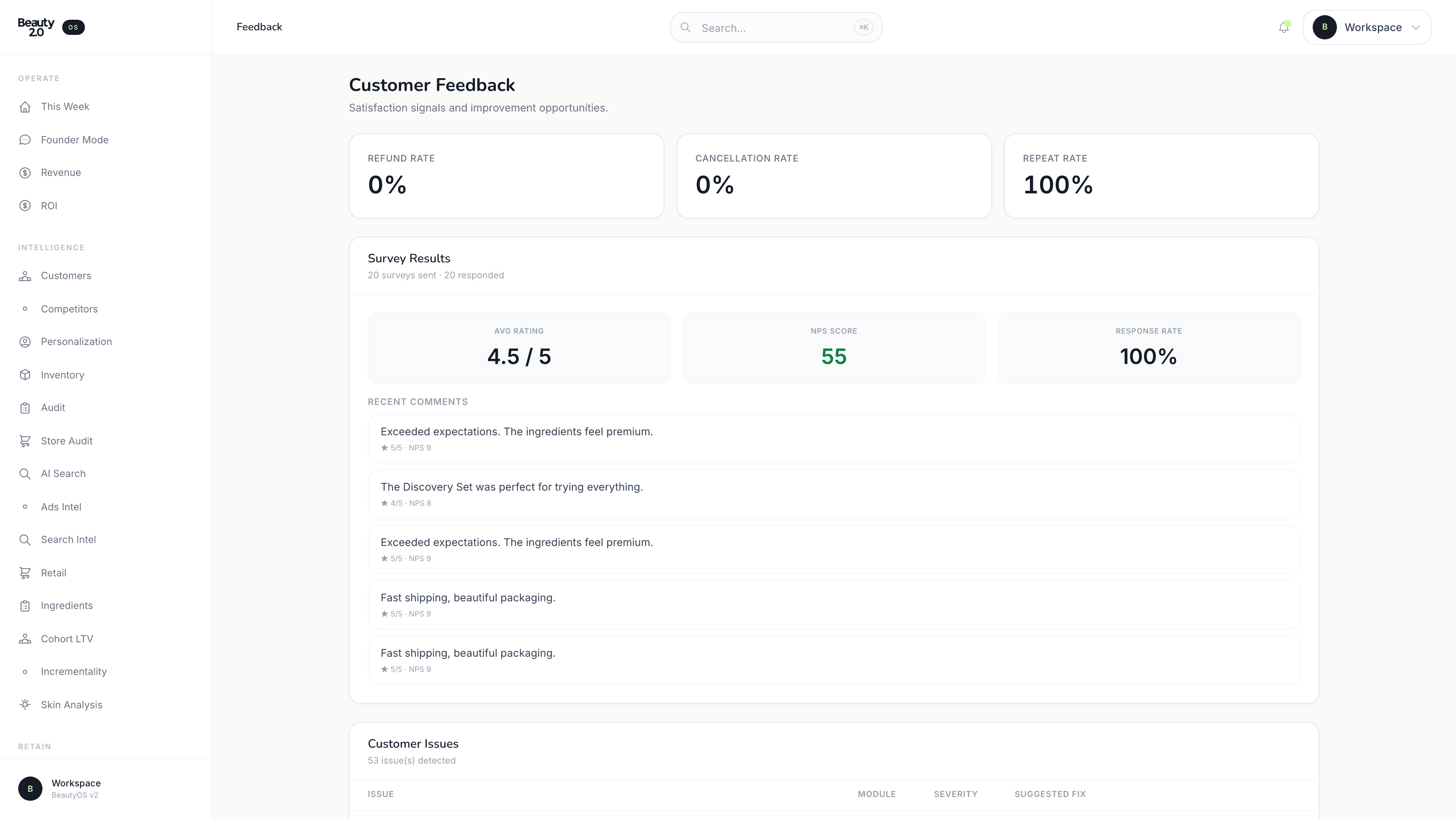
Every Beauty 2.0 engagement persists into the operating system. Track it, review it, and iterate without rebuilding the data each time.
Go deeper on this
Articles, resources, and definitions that connect to this solution.
From the blog
Sephora Is Opening in 100 M&S Stores. Its Kohl's Deal Is Now Described as a Drag on Kohl's. Same Format, Different Host.
DTC GrowthAïza Grew Revenue Ninefold With About 20 Staff and One Product Doing a Third of Sales. That Combination Is the Story.
DTC GrowthMilani Doubled to $250m Holding Three Price Points and One Customer. Most Brands Fragment Instead.
In the glossary
Ready to fix this?
Start with a discovery call to talk through what is happening, or book an audit if you want a structured diagnosis first.