Retail readiness is an operations problem, not a sales problem
Buyer meetings are the easy part. The hard part is the operational infrastructure behind them: compliance, forecasting, reporting, and fulfilment confidence.
Why good products still fail in retail
Most beauty brands prepare for retail by working on the pitch. The brands that succeed prepare by building the operational infrastructure that buyers actually care about. They want to know you can deliver consistently, report accurately, and handle compliance without surprises.
Where retail readiness breaks
Compliance gaps
Ingredient claims, labelling requirements, and category-specific regulations are checked too late or not at all. This surfaces during buyer due diligence, not before.
Forecasting weakness
Demand planning is based on hope rather than data. Stock-outs and overstock damage buyer confidence and erode the commercial case.
Reporting fragility
Buyer-ready performance reports do not exist or take days to compile from 4-5 disconnected systems.
What most brands do
Most brands focus on the pitch deck and product presentation. They underestimate how much retail success depends on operational systems that have nothing to do with the product itself.
What Beauty 2.0 builds instead
We build the operational foundation that retail requires. Compliance checking systems that validate claims per market. Forecasting models that connect sell-through data to demand plans. Automated buyer-ready reporting that produces accurate numbers in minutes, not days.
What you get
Expected outcomes
Buyer confidence
Walk into meetings with data, not slides. Pass due diligence on operations, not just product.
Compliance certainty
Every claim, ingredient, and label checked before it becomes a buyer objection or regulatory risk.
Accurate forecasting
Demand planning based on sell-through data, seasonal patterns, and launch velocity, not gut feel.
Faster reporting
Buyer-ready reports generated in minutes from connected data, not compiled manually across systems.
Who this is for
- Brands entering retail for the first time who need operational confidence before buyer meetings
- Brands expanding retail presence who have failed or struggled with buyer due diligence before
- Ops leads responsible for compliance, forecasting, and reporting who are doing everything manually
Implementation timeline
Initial audit
1-2 weeks
System build
6-8 weeks
Retail-ready
8-12 weeks.
Not ready for the full system?
Start with a focused audit
Get a clear diagnosis of where the problem sits and what to fix first. No commitment to a full system build until you have the evidence.
Related reading
Common questions
What retailers does this prepare us for?
The system is designed to meet the operational standards of UK and European retailers. The specific compliance and reporting requirements are configured per target retailer.
Can this help if we have already been rejected by a buyer?
Yes. Buyer rejections are usually based on specific operational gaps. We diagnose exactly what failed, fix it systematically, and prepare you to go back with confidence.
Where this solution runs
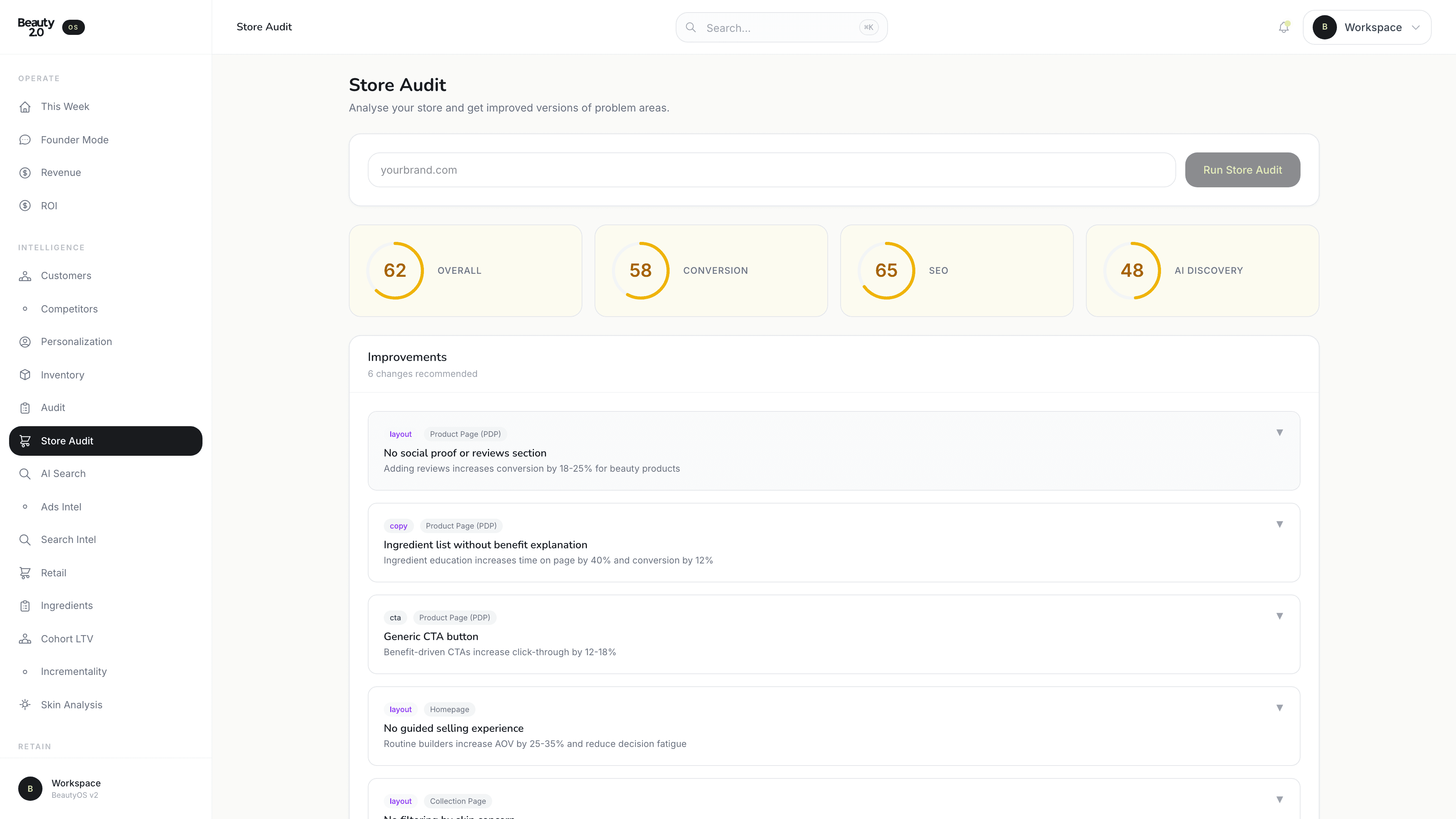
Every Beauty 2.0 engagement persists into the operating system. Track it, review it, and iterate without rebuilding the data each time.
Go deeper on this
Articles, resources, and definitions that connect to this solution.
From the blog
Sephora Is Opening in 100 M&S Stores. Its Kohl's Deal Is Now Described as a Drag on Kohl's. Same Format, Different Host.
Founder's PlaybookThe Outset Had 500 Sephora Doors and a Million Social Followers. It Still Shut Down After Four and a Half Years.
Founder's PlaybookSarelly Raised a Bridge Round to Fill Target's Orders. That Is the Real Cost of a 600-Door Launch.
In the glossary
Related solutions
Ready to fix this?
Start with a discovery call to talk through what is happening, or book an audit if you want a structured diagnosis first.