Stop forecasting by feel
Stock-outs lose sales. Overstock kills cash flow. Both happen when forecasting is based on intuition instead of data.
Why forecasting stays unreliable despite more data than ever
Most beauty brands forecast demand using spreadsheets, gut feel, and last year's numbers adjusted upward. The result is either empty shelves during peak or warehouses full of unsold stock after a launch. Both cost money. Both are avoidable with the right system.
Where forecasting breaks
Stock-out risk
Hero SKUs go out of stock during peak periods because demand signals were not tracked or weighted correctly.
Overstock waste
New launches are over-ordered based on optimism rather than data. Cash is locked in unsold inventory that eventually gets discounted.
No sell-through visibility
The team does not know what is actually moving in which channel until it is too late to respond with production or reorder.
What most brands do
Most brands add buffer stock to everything (costing cash), reorder reactively (causing delays), or rely on gut feel from the founder or ops lead. None of these scale with the business.
What Beauty 2.0 builds instead
We build forecasting systems that connect sell-through data, seasonal patterns, launch velocity, and channel mix into demand plans that actually work. The system learns from each cycle, so forecasting accuracy improves over time rather than staying static.
What you get
Expected outcomes
Fewer stock-outs
Hero products stay in stock during the periods that matter most.
Less overstock
New launches ordered based on data patterns, not optimism.
Better cash flow
Less working capital tied up in unsold inventory.
Channel visibility
Real-time sell-through data across all channels in one view.
Who this is for
- Ops leads managing inventory by spreadsheet and gut feel
- Founders who have experienced costly stock-outs or overstock situations
- Finance leads who need better cash flow predictability from inventory management
Implementation timeline
Initial audit
1 week
System build
4-6 weeks
First forecast cycle
6-8 weeks.
Not ready for the full system?
Start with a focused audit
Get a clear diagnosis of where the problem sits and what to fix first. No commitment to a full system build until you have the evidence.
Common questions
How accurate can forecasting actually get?
With proper data connection and 2-3 cycles of learning, most brands achieve forecast accuracy within 10-15% of actual demand. This is dramatically better than gut-feel accuracy, which is typically 30-50% off.
Where this solution runs
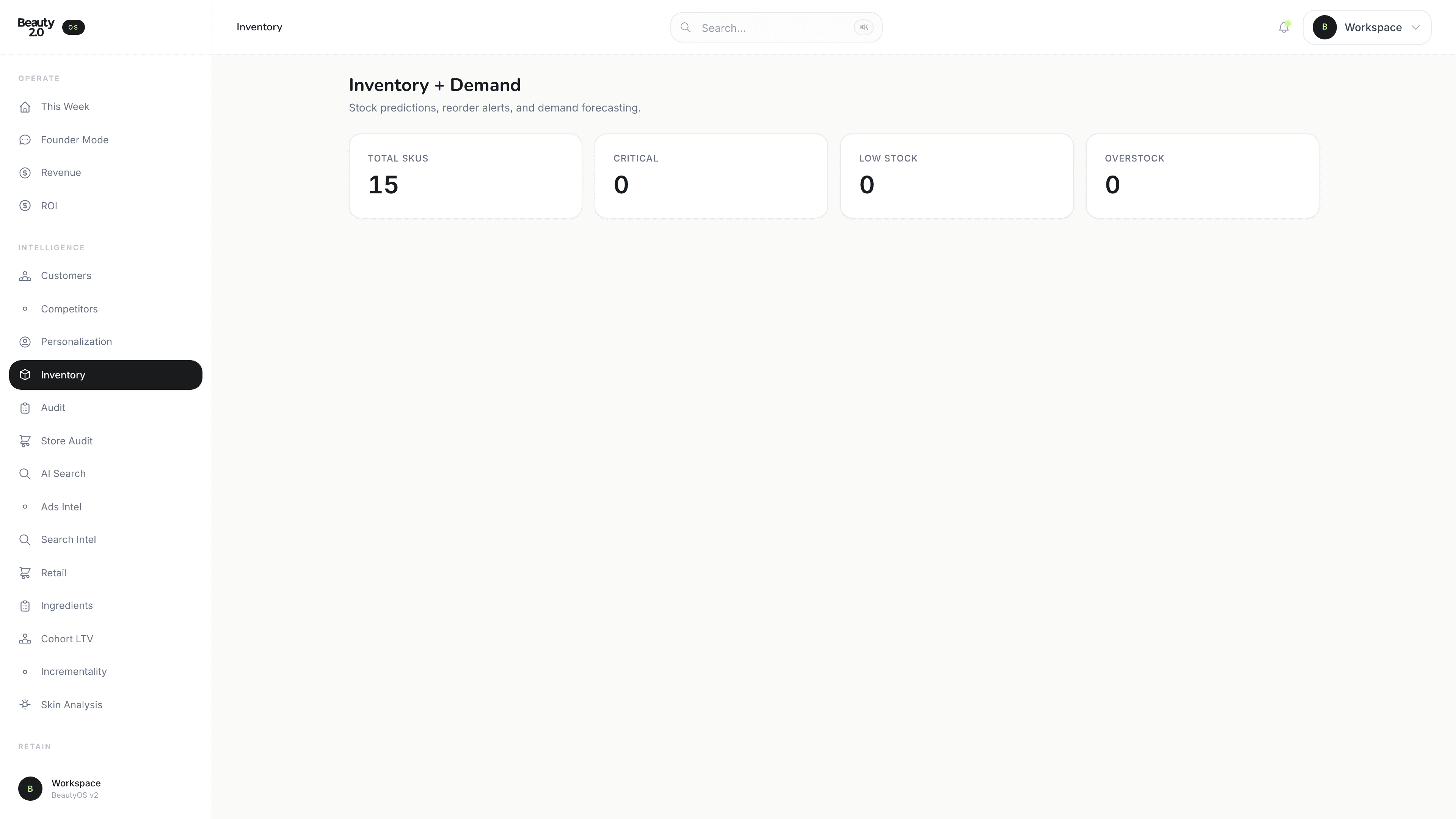
Every Beauty 2.0 engagement persists into the operating system. Track it, review it, and iterate without rebuilding the data each time.
Go deeper on this
Articles, resources, and definitions that connect to this solution.
From the blog
BASF Has Bid €10.3bn for Evonik. Two of the Biggest Suppliers of Your Formula's Ingredients May Become One.
Retail & OperationsSephora Is Opening in 100 M&S Stores. Its Kohl's Deal Is Now Described as a Drag on Kohl's. Same Format, Different Host.
Industry TrendsSweaty Betty and Bella Freud Both Launched Beauty Through Boots This Month. Neither Is a Beauty Brand.
In the glossary
Ready to fix this?
Start with a discovery call to talk through what is happening, or book an audit if you want a structured diagnosis first.