Compliance checked before it becomes a problem
One unsupported claim can pull a product from shelf. One labelling error can block a market. Compliance should be systematic, not last-minute.
Why compliance keeps catching brands off guard
Beauty compliance is complex and getting more so. Ingredient regulations vary by market. Claim substantiation rules tighten every year. Most brands check compliance too late in the process, discovering problems during production, at retail, or after a customer complaint.
Where compliance breaks
Late-stage discovery
Compliance issues surface during production or at retail, not during formulation or copy development. Fixing them late is expensive and disruptive.
Market-by-market complexity
What is permissible in the UK may not be in the EU, US, or Middle East. Managing this manually across multiple products and markets is error-prone.
Claim vulnerability
Marketing claims are written without systematic ingredient or efficacy substantiation. This creates regulatory risk and buyer objection risk.
What most brands do
Most brands rely on occasional external regulatory reviews that check a snapshot in time. They do not have continuous compliance monitoring or claim validation integrated into their content and product development workflows.
What Beauty 2.0 builds instead
We build compliance checking into the workflow itself. Claims are validated at creation, not after launch. Labelling is checked per market before production. Regulatory changes are tracked and flagged proactively.
What you get
Expected outcomes
Earlier detection
Compliance issues caught during development, not production or post-launch.
Market confidence
Labelling and claims validated per market before commitment.
Reduced risk
Systematic checking replaces ad-hoc review. Gaps do not hide.
Faster NPD
Compliance built into the process speeds up new product development rather than slowing it down.
Who this is for
- Regulatory and NPD teams managing compliance across multiple products and markets manually
- Founders launching into new markets who need confidence that claims and labelling are defensible
- Ops leads who have experienced compliance surprises late in the product development cycle
Implementation timeline
Initial check
1-2 weeks
System build
4-8 weeks depending on product range and market count.
Not ready for the full system?
Start with a focused audit
Get a clear diagnosis of where the problem sits and what to fix first. No commitment to a full system build until you have the evidence.
Related reading
Common questions
Which markets does this cover?
We configure the system for your target markets. Common configurations cover UK, EU (with country-specific variations), and US. Additional markets can be added.
Where this solution runs
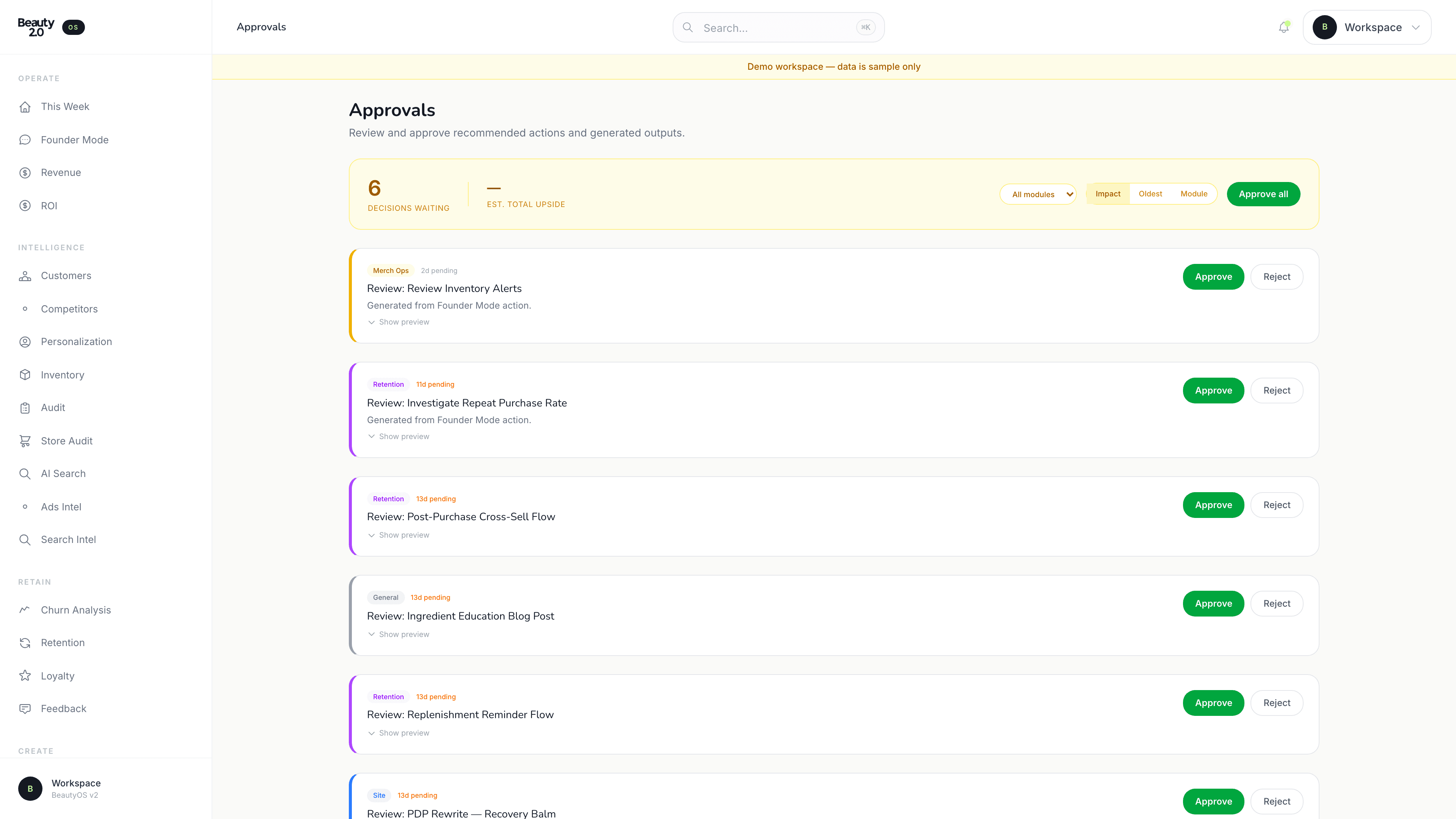
Every Beauty 2.0 engagement persists into the operating system. Track it, review it, and iterate without rebuilding the data each time.
Go deeper on this
Articles, resources, and definitions that connect to this solution.
From the blog
BASF Has Bid €10.3bn for Evonik. Two of the Biggest Suppliers of Your Formula's Ingredients May Become One.
Founder's PlaybookThe Outset Had 500 Sephora Doors and a Million Social Followers. It Still Shut Down After Four and a Half Years.
Industry TrendsSweaty Betty and Bella Freud Both Launched Beauty Through Boots This Month. Neither Is a Beauty Brand.
In the glossary
Ready to fix this?
Start with a discovery call to talk through what is happening, or book an audit if you want a structured diagnosis first.